
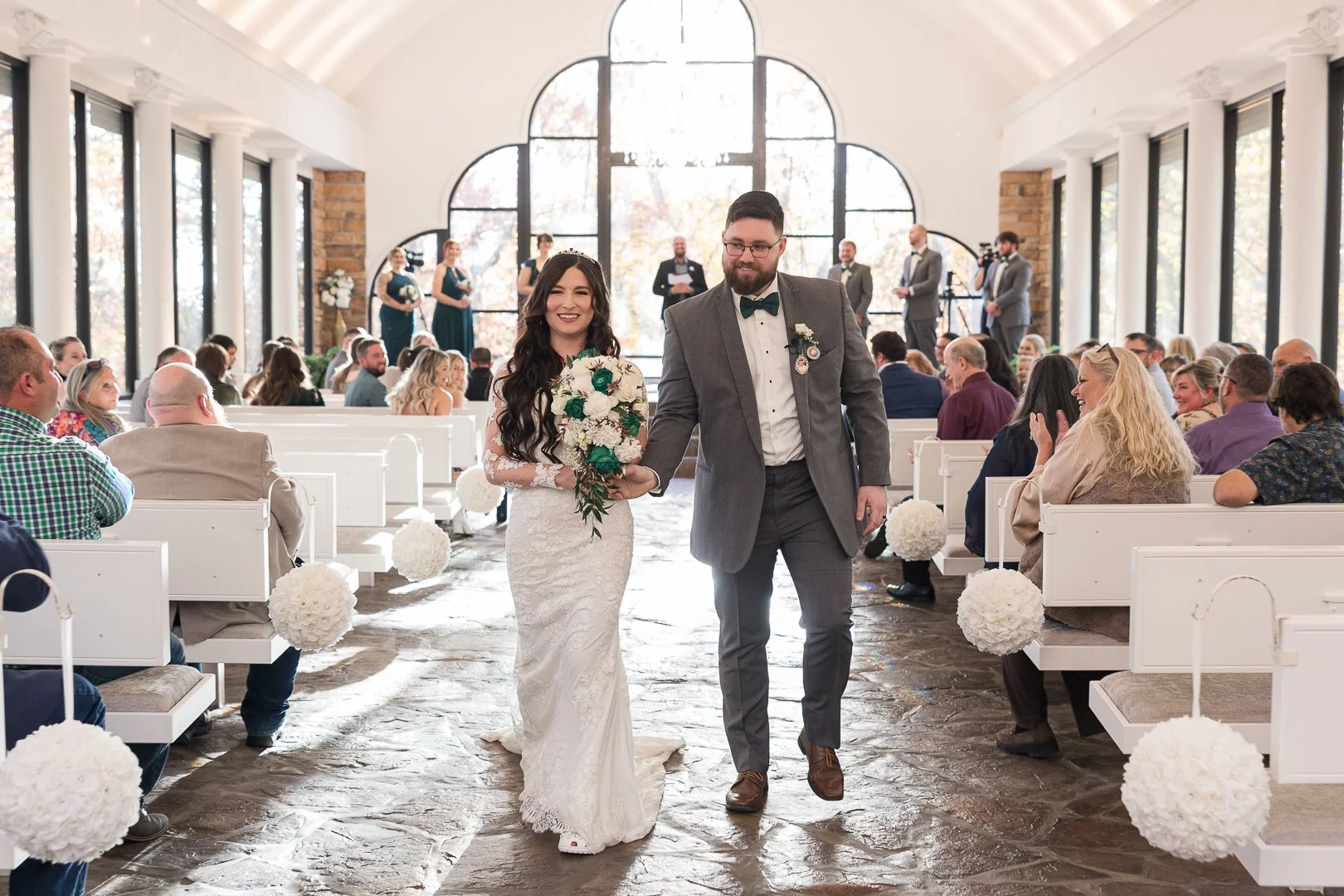
One of the most common questions couples ask is: “What ceremony time has the best light?” At Stonegate Glass Chapel, the honest answer is — for most of the year, you really can’t go wrong. Because the chapel is surrounded by trees and built almost entirely of glass, the light is naturally softened before it ever reaches your ceremony space. The trees act as a filter, creating beautiful, diffused light throughout the day. That means whether your ceremony is mid-afternoon or early evening, it typically feels bright, open, and balanced. However, there are a few seasonal nuances worth understanding.
Why Most Months Are Very Forgiving
From late spring through early fall, the trees surrounding the chapel are full and green. That canopy does a lot of work.
It:
Softens direct sunlight.
Reduces harsh shadows.
Creates even lighting across the ceremony space.
Keeps the chapel feeling bright without being blinding.
Because of this natural filtering, mid-afternoon ceremonies work beautifully. Early afternoon ceremonies work beautifully. Even early evening ceremonies feel warm and balanced. You’re not battling direct, overhead glare the way you might in a wide-open outdoor venue. The structure of the space works in your favor.
When Light Gets a Little Tricky
There are a couple of months each year where you do want to think more intentionally about timing. When the leaves begin to fall and the days get shorter — typically November and December — the natural filter provided by the trees starts to thin out. That’s when the angle of the sun becomes more noticeable inside the chapel. In particular, the 4:00–5:00 p.m. window during late fall and early winter can create direct sunlight coming through certain sections of the glass. It can be incredibly beautiful — warm, golden, almost glowing — but it can also be a little intense for guests seated in the first few rows. It’s not a deal-breaker. Many couples still choose that timeframe and love the look. But it’s something to be aware of if you’re sensitive to glare or concerned about guest comfort.
What to Consider When Choosing Your Time
When selecting your ceremony start time, it helps to think about a few factors:
What season are you getting married in?
Are you hoping for sunset portraits afterward?
Are most of your guests local or traveling?
Do you want a shorter daylight reception or a longer evening celebration?
In summer months, earlier afternoon ceremonies often provide plenty of daylight for portraits and transitions. In fall and winter, slightly earlier start times (for example, 2:30–3:30 p.m.) may help you avoid that late-afternoon direct sun while still allowing for beautiful natural light. The key is building your timeline around both light and flow — not just one or the other.
Don’t Overthink It
It’s easy to fall into the trap of trying to find the “perfect” minute on the clock. The reality is, Stonegate is designed to maximize natural light in a way that’s forgiving. The glass walls and surrounding trees create an environment that photographs beautifully almost any time of day for most of the year. Outside of those late fall and early winter sun angles, the space does most of the work for you.
If you’re unsure, this is something we walk through regularly with couples. Because we’ve seen how the light behaves in every season, we can help you choose a start time that feels both beautiful and comfortable.
At the End of the Day
Natural light is one of the defining features of Stonegate Glass Chapel. It’s what makes the space feel open, peaceful, and connected to the outdoors. For most months, you have flexibility. During November and December, you may want to avoid that 4:00–5:00 p.m. window if guest comfort is a concern. Beyond that, trust the design of the space. It was built to be bright. And that’s exactly what it delivers.